The pursuit of superior financial returns is often distilled into a single, highly coveted metric: alpha (α). It represents the “edge” of an investment strategy—the excess return generated above a benchmark, after adjusting for risk. For portfolio managers, alpha is the ultimate signal of skill. For investors, it is the promise of beating the market.
Yet despite its appeal, alpha is rare, difficult to sustain, and frequently misunderstood.This article today explores what alpha truly represents, why it is so elusive, and how real-world evidence increasingly challenges the traditional belief in active outperformance.
Understanding Alpha: Skill or Risk?
At a basic level:
Alpha = Portfolio Return – Benchmark Return
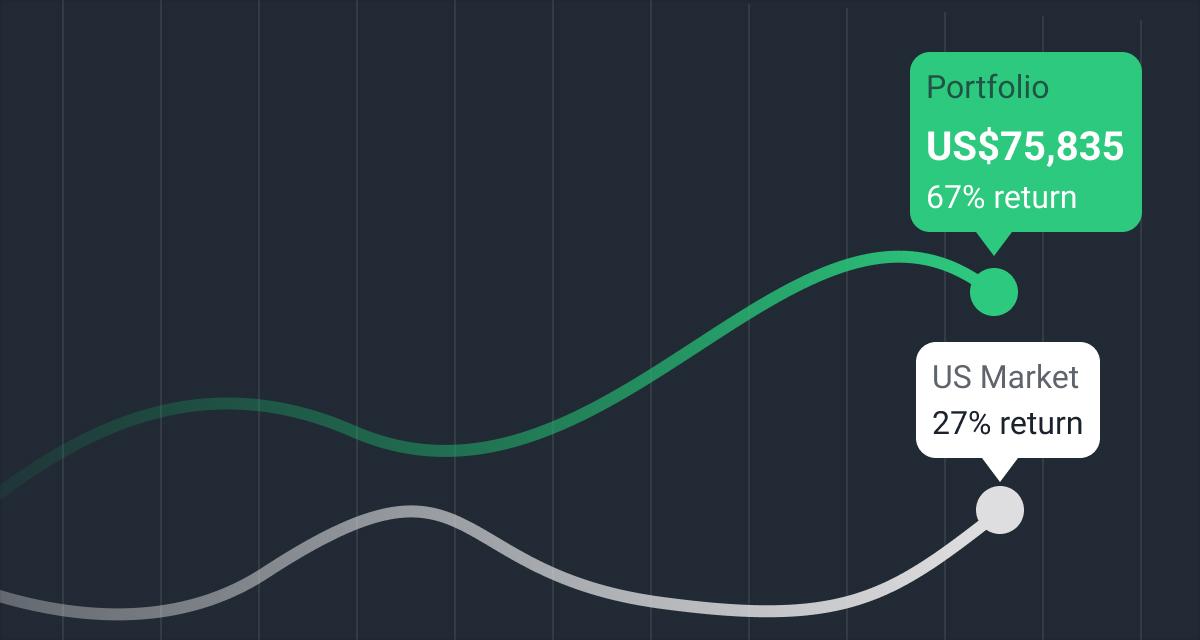
If your portfolio returns 15% while the market returns 10%, you appear to have generated +5% alpha.
But this simple calculation ignores a critical factor: risk.
Professional investors instead rely on Jensen’s Alpha, which adjusts for:
- The risk-free rate
- Market exposure (beta)
This distinction is crucial. A portfolio that outperforms simply because it took on more risk has not generated true alpha—it has merely been compensated for risk.
True alpha is not about higher returns.
It is about superior risk-adjusted returns.
Active vs Passive: The Empirical Reality
Over the past two decades, one of the most important developments in global finance has been the shift from active to passive investing.
The reason is simple: data.
Most active managers fail to outperform their benchmarks over meaningful time horizons, especially after fees.
What This Shows
- Passive investing benefits from low costs and compounding
- Active returns are eroded by fees and inefficiencies
- Over time, passive strategies tend to outperform the majority of active managers
This is not theory—it is one of the most consistent findings in financial markets globally.
The Alpha Illusion: Why Outperformance Fades
Even when alpha appears, it rarely lasts.
Why Alpha Decays
- Capital flows: success attracts capital, reducing inefficiencies
- Competition: more participants exploit the same opportunities
- Information efficiency: markets rapidly incorporate new information into prices
- Crowding effects: popular trades become saturated and reverse
What begins as genuine outperformance often converges toward zero or even turns negative.
Real-World Examples of Alpha (and Its Limits)
Warren Buffett
Few investors have consistently generated alpha like Warren Buffett through Berkshire Hathaway.
- Decades of outperformance vs the S&P 500
- Disciplined value investing approach
- Strong capital allocation
However, Buffett is an outlier. His success is so rare that it has been studied extensively in academic finance.
ARK Invest
ARK Invest, led by Cathie Wood, delivered exceptional returns in 2020.
- Heavy exposure to high-growth technology stocks
- Significant outperformance during a specific market regime
But:
- Rising interest rates reversed those gains
- Performance declined sharply
This illustrates a key point: not all alpha is skill—some is timing and market conditions.
Nairobi Securities Exchange
In markets like the Nairobi Securities Exchange, alpha is often misinterpreted. Stocks such as:
- Safaricom
- KCB Group
- KenGen
may deliver strong returns during recovery periods.
But this may reflect:
- Economic cycles
- Sector rotation
- Market beta
—not necessarily true alpha.
The Fee Problem: When Alpha Disappears
Even when alpha exists, it may not benefit the investor.
Consider:
- Gross alpha: +1.0%
- Management fee: 1.5%
Net result: -0.5% underperformance.
This fee drag is one of the most powerful forces in investing.
It explains why:
- Low-cost index funds have gained dominance
- Institutional investors are increasingly fee-sensitive
- Alpha must be evaluated net of costs, not before
The Benchmark Problem
Alpha is only meaningful if measured against the correct benchmark.
Examples of poor benchmarking:
- Comparing a dividend strategy to a broad market index
- Comparing a niche sector fund to a general index
- Ignoring differences in risk exposure
This leads to false alpha—outperformance that is actually just a mismatch in risk.
The Three Biggest Misconceptions About Alpha
- High returns equal alpha
- Short-term success equals skill
- Active management is superior
Each of these assumptions breaks down under closer analysis.
Where Alpha Actually Exists
Despite the challenges, alpha does exist, but in specific conditions:
- Information advantages (institutional access)
- Illiquid markets (private equity, frontier markets)
- Behavioral inefficiencies (panic, overreaction)
- Quantitative strategies (data-driven anomalies)
Even then, it is difficult to identify, hard to scale, and challenging to sustain.
Final Insight: The Real Edge
Alpha remains the holy grail of investing, but it is not a guarantee. It is a scarce resource that requires discipline, precision, and realism.
For most investors, the smarter strategy is not chasing alpha blindly, but understanding:
- When it is real
- When it is temporary
- When it is an illusion
The focus is not just on pursuing alpha, but on measuring it correctly, protecting it from decay, and ensuring it survives costs, cycles, and competition.
The true edge is not just generating alpha.
It is knowing where it actually exists.